
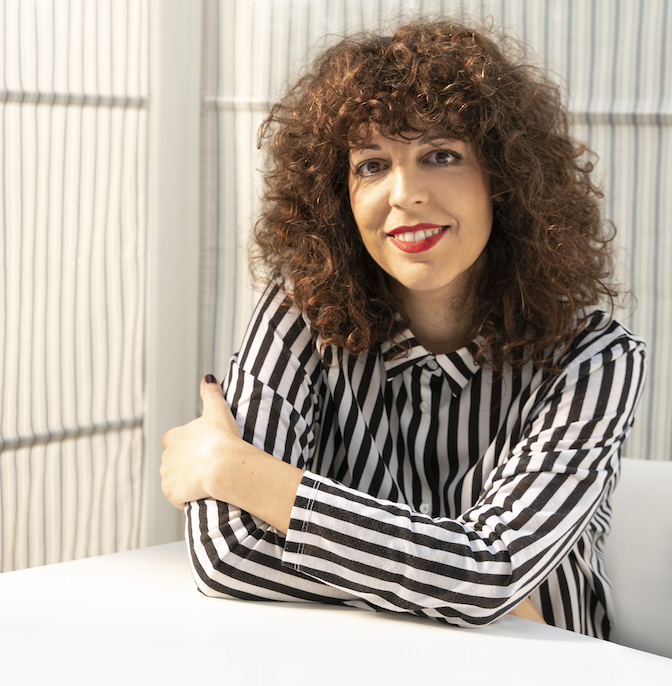
Marta Soul is a visual artist and independent curator based between Spain and the United Kingdom. Her curatorial practice focuses on contemporary photography, with a strong interest in creative processes, gender narratives, critical thinking, and collaborative models of cultural production. She began her curatorial career in 2005 as a co-founder of the photography collective NOPHOTO, where she developed exhibitions, international projects, and artist-led initiatives across Europe, Latin America, and Asia for nearly a decade. Since then, her curatorial work has evolved in close dialogue with her artistic practice, understanding curating as a space for research, artistic accompaniment, and context-building rather than a purely exhibition-driven exercise. Between 2009 and 2012, she directed the international artist residency programme Lugares de Tránsito, funded by the Spanish Ministry of Culture and AECID. From 2013 to 2014, she curated Huéspedes del Presente at CentroCentro Cibeles (Madrid), a programme combining exhibitions and artist residencies in collaboration with institutions in Brazil, Guatemala, Mexico, and Peru. In 2015, she created Transvisiones, an international residency programme for Centro de Arte Alcobendas, presented within the official programme of PHotoEspaña.
In 2020, she founded the cultural platform Cómo Ser Fotógrafa, from which she has developed an extensive curatorial, educational, and mediation programme dedicated to contemporary photography by women. Through this platform, she has curated exhibitions such as En Escena (Galería Nueva, Madrid; Red Itiner, Community of Madrid; Head On Photo Festival, Sydney; Africa Foto Fair, Ivory Coast), Una Visión Propia (Lázaro Galdiano Museum, Madrid; Museo del Greco, Toledo), Un Cambio de Paradigma (Sala de Arte Joven, Community of Madrid; Instituto Cervantes, Rio de Janeiro), and Dialogues on Ecofeminism (Cairo International Art District, Cairo). Alongside her exhibition work, she directs the Cómo Ser Fotógrafa Professional Conferences, which combine talks, portfolio reviews, and critical discussion spaces in collaboration with institutions such as Complutense University of Madrid, Casa de Velázquez, Master PHotoEspaña, or the Community of Madrid. Her curatorial practice is defined by a situated and feminist perspective, a strong
commitment to artistic processes, and the creation of cooperative frameworks that
foster professional networks, critical reflection, and new forms of cultural production.